
October 2025 brightonSEO Key Takeaways

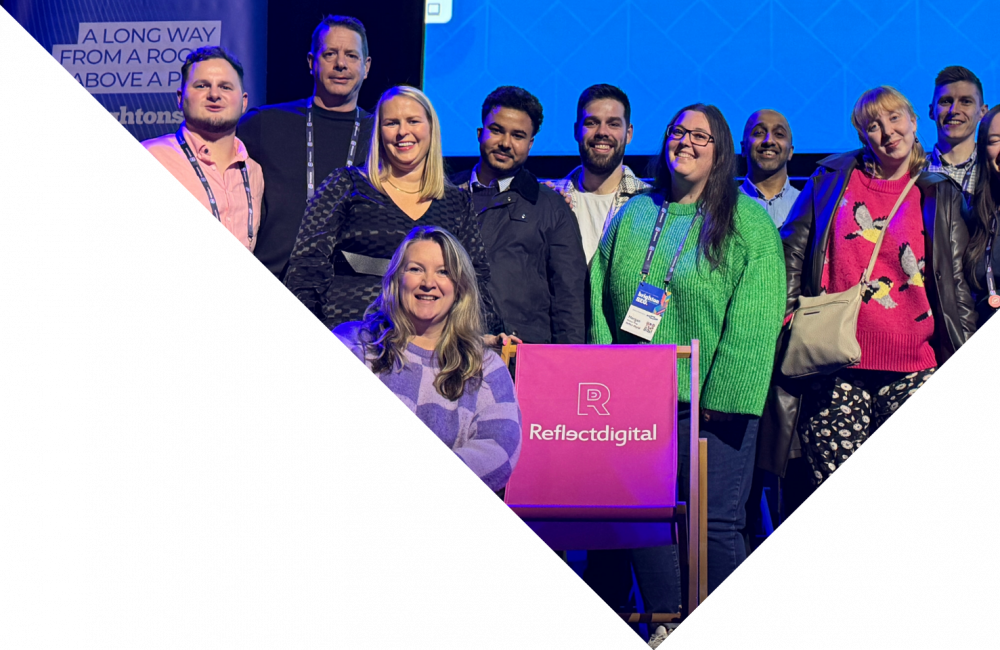
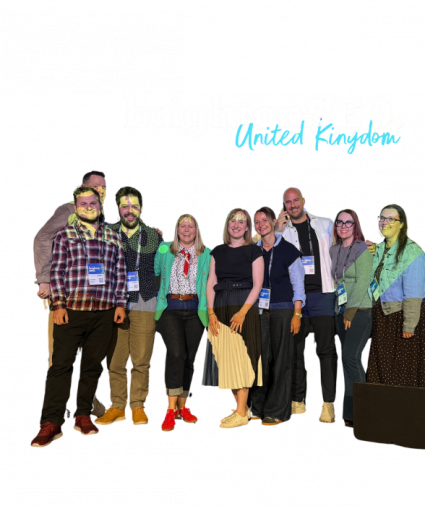
We were thrilled to be back at brightonSEO with four of our wonderful team taking to the stage for various talks and moderation! While the industry is preoccupied with one issue in particular at the moment, we came away from the event with strategic, technical and creative learnings.
The Elephant in the Room
The focus on AI this year was inevitable - it's one of the biggest tools (and obstacles) to contend with as SEOs right now. Unfortunately, this does mean that the main stage in particular was saturated with speakers repeating the same talking points over and over.
A marked change from April 2025's brightonSEO, however, is that the focus has shifted. October’s event was less about how marketers can use AI, and more about how to respond to the way AI is reshaping the nature of search in general.
If you're a cynic when it comes to GEO (or, you know, whatever else you call it) you might have walked away from October 2025's brightonSEO with an ouroboros-like image in your head:
- Users get a patchwork summary of the answer to their query from the AI engine of their choice
- They interact with other people on forums and social media for human validation
- Everything posted is regurgitated back into LLM search results.
The snake eats its own tail.
SEO was once a tricksy field full of black-hat practices designed to trick search engines; over the decades we've moved away from optimising for robots and started creating a better experience for humans, leaning on other disciplines to produce the best results. Is GEO a step backwards, forcing us to optimise for the robots once again? And will that just lead to samey, uninspiring content?
Well, not quite. No one put it better than Mike King, Friday's keynote speaker: Users never actually wanted 10 blue links. It's not a cognitive or time-efficient way to find answers - the contextual summaries produced through AI Overviews or LLMs are meeting their needs more effectively than was previously thought possible. They get quick, digestible, and - most importantly - personalised answers.
And the reason this is a positive thing for SEOs, and marketers in general, is that this new conversational search landscape is driving us to gain a deeper understanding of search behaviour and search intent in order to stay ahead. More insight could never be a bad thing!
Other Key Takeaways
Now that's out of the way, what else should we be thinking about after BrightonSEO?
Much like in April 2025, experts generally recommend "not putting all your eggs in the Google basket", instead using the fracturing of preferred search platforms to your advantage and creating content for different mediums. Search and social need to cast aside their siloed working habits and work together.
Investing in your brand and audience is key to standing out. Having a unique voice, and earning the loyalty of customers, is the only way to ensure that you not only keep showing up in SERPs, but showing up positively.
And we couldn't possibly forget E-E-A-T! Building authority is more crucial than ever. Pour more focus into trust signals - data, citations, author bios, reviews, awards - which can be scraped by LLMs and Google spiders alike, and it will go a long way. There were also a number of fantastic talks this year re-emphasising the enormous value of digital PR for this.
Wisdom from the Reflect Digital Team
Matt Greenwood-Wilkins, ‘Automate to elevate: making space for human brilliance’
Our very own Innovation & Automation Lead Matt’s talk was the perfect answer to the day's big questions, showing exactly how to use AI to create efficiencies so that we can make more space for what humans do best. It was all about automating to elevate, where we can let AI handle the heavy lifting of certain tasks, freeing up our brains to focus on strategy, behavioural insights, and the creative sparks that AI just can't manufacture.
In his words, not ours, he was excited to share a talk that was “less nerdy”, and more broadly actionable at this point in time for businesses looking to innovate.
Becky Simms, ‘Why there? The psychology of search behaviour’
Our fantastic CEO Becky brought an incredible energy to the main stage. Effortlessly commanding the attention of the room, she shared invaluable insights on how search behaviour is changing, rooted in our Searchpulse research. It was a clear, accessible introduction to how an understanding of human behaviour can supercharge your search strategy, and an extremely proud moment for our team!
Keen to learn all about the future of search and the nature of search behaviour? Take a look at Searchpulse for yourself, and use the AI Agent to answer your burning questions!
Yordan Dimitrov, ‘Forget SEO vs. AI. Build a brand people trust or get left behind’
Rounding off day one, Yordan Dimitrov, delivered another brilliant talk that cut right to the chase. His message? Stop worrying about AI, and focus on building a brand that people genuinely trust.
As someone frequently quoted saying that brightonSEO is “his Christmas”, you can imagine how passionate and engaging Yordan’s talk was! In a sea of AI-related talks, Yordan stood out with his insightful and singular dissection of how the top brands are using sentiment analysis to stand out.
Yordan explained how to lean into all the conversations happening around your brand, control the narrative, and be there to answer your customers' questions honestly. Ultimately, building that trusted relationship is the most future proof strategy you can have, and it's one that no trend or tool can ever replace.
Our Favourite Talks
Ella’s choices as an SEO Copywriter:
Jack Chamber-Wards, ‘The future of content with zero clicks’
I had a bit of a “Aha!” moment while listening to this talk - Jack Chamber-Wards talks about the so-called “social contract” between us and Google. We assume that if we give them good content, they’ll give us traffic, but Google never agreed to this.
So Jack proposes a step-by-step plan to ensure you’re not entirely dependent on Google traffic in the age of zero-click searches: Develop a brand, develop an engaged audience, and diversify your revenue streams. This is a necessary step to stop different updates and changes from killing your traffic. He has tons of personal examples to draw from, which made this extra engaging.
Sharon Gwati-Mudzudzu, ‘Hip-hop, data analytics and the user journey’
I love a little storytelling at brightonSEO, and Sharon Gwati-Mudzudzu delivered. She uses hip-hop to reframe and recontextualise the user journey - hook, verse, chorus, outro - and make recommendations on how to measure performance.
This is an excellent metaphor for people who may not understand intuitively how to approach data analytics. As someone a little data illiterate, I was sort of thrilled by how easy this was to follow - literally anyone could draft a strategy to measure success after this. And her final message, that "behind every metric is a story attached to a real person with real needs", really resonated with me.
Luke Carthy, ‘Last-click attribution is broken and it’s hurting SEO’
I was fortunate enough to hear Luke Carthy speak at LondonSEO XL last year, so despite the fact that a lot of technical information tends to go over my head, I was excited to catch his talk.
What he presented was a surprisingly accessible (and deeply funny) discussion on last-click attribution and how many of our data analytics tools are fundamentally flawed. Then he offers solutions to fix the problem, and empower SEO teams to showcase their actual reach. It was a really fascinating insight into a side of SEO I don’t normally see.
Hannah’s choices as a Senior Growth Marketing Manager:
Stuart Tofts, ‘Measuring what matters: Going beyond Tech SEO to track real impact’
Stuart Toft’s talk was a timely reminder that failing to make our websites accessible is actively ignoring one of the world's largest markets, the very definition of a non-human-first approach.
With the new European Accessibility Act (EAA) laws on the horizon, this is moving from a best practice recommendation to a legal necessity. It is a prompt to champion inclusivity in our builds and content, ensuring the experiences we create are for everyone.
Tom Vaughton, ‘The SEO identity crisis: Don’t let AI make you average’
This talk tackled the AI sameness trap head-on, warning that if we all rely on the same AI outputs, we all end up sounding the same as each other. Tom Vaughton championed the idea of SEO as a team sport, where our role is to work with creative teams and use AI but not a replacement.
His point was clear - automation can make us incredibly efficient - but it can't replicate human insight and true creativity. The winners in this new landscape will be the ones who use their human brilliance to challenge the status quo, not just automate it.
Rachael Murdoch, ‘What’s the point of a website anymore?’
Rachael Murdoch explored the evolving role of a website when the user journey is becoming incredibly fractured. With the rise of agentic shopping (where AI agents might make purchasing decisions for us) and a constant fight for traffic, our website is no longer the guaranteed final destination.
It’s a huge challenge for SEOs. We need to think about optimising for visibility everywhere, whether that's in organic shopping listings, AI generated answers, or other third-party platforms. Our website may become less of a simple transactional tool and more of a central hub for building trust and handling complex user needs.
What are we going to do next?
We’ve asked our team what they learned at brightonSEO - specifically, which learnings are they going to try and implement? This is what they have to say:
Carl Poxon, SEO Director: “A lot of the talks this time at brightonSEO had some element of AI and the current state of play. My biggest take away was that all of these LLM tools are still evolving albeit at a rapid rate. What this means is that we need to implement strategies and processes to take advantage of likely evolutions in the search space.”
Morgan Rodway-Wing, Senior Digital PR & Content Executive: “I’m going to utilise some behavioural nudges I haven’t played with much in my content until now, namely the IKEA Effect and the Endowment Effect. I also want to think more about how I can anticipate multi-turn searches in my content writing. For example, when writing FAQs, I’ll consider how the questions I’m answered might lead to more questions.”
Amelia Miles, SEO Executive: “One of my favourite talks from the day was delivered by Erin Simmons. They spoke about the power of showing up authentically in a community and how visibility is a byproduct of trust when it comes to organic growth.
Off the back of this talk, I'm definitely going to be more involved with a community e.g. Women in Tech SEO (WTS), and use it as a tool to show up authentically and offer insights and advice where needed. To build visibility for both my own personal brand, and my company’s, I've learnt that showing up in a community, building trust, helping where you can, and nurturing connections all lead to gaining visibility in a space so that people know to come to you when it matters based on familiarity (touching on the cognitive overload behavioural science nudge).”
Key Takeaways
In short, October 2025’s brightonSEO was full of great learnings from key figures in the SEO industry.
There was a clear theme running through most talks of how do we balance the huge power of AI and automation with the irreplaceable value of human insight - it’s a question we live and breathe, so it was fantastic to see the community tackling it head-on. That said, we’re also glad that there were so many things to learn outside of the AI bubble, and we’re looking forward to what 2026’s event has to offer.
Contact Us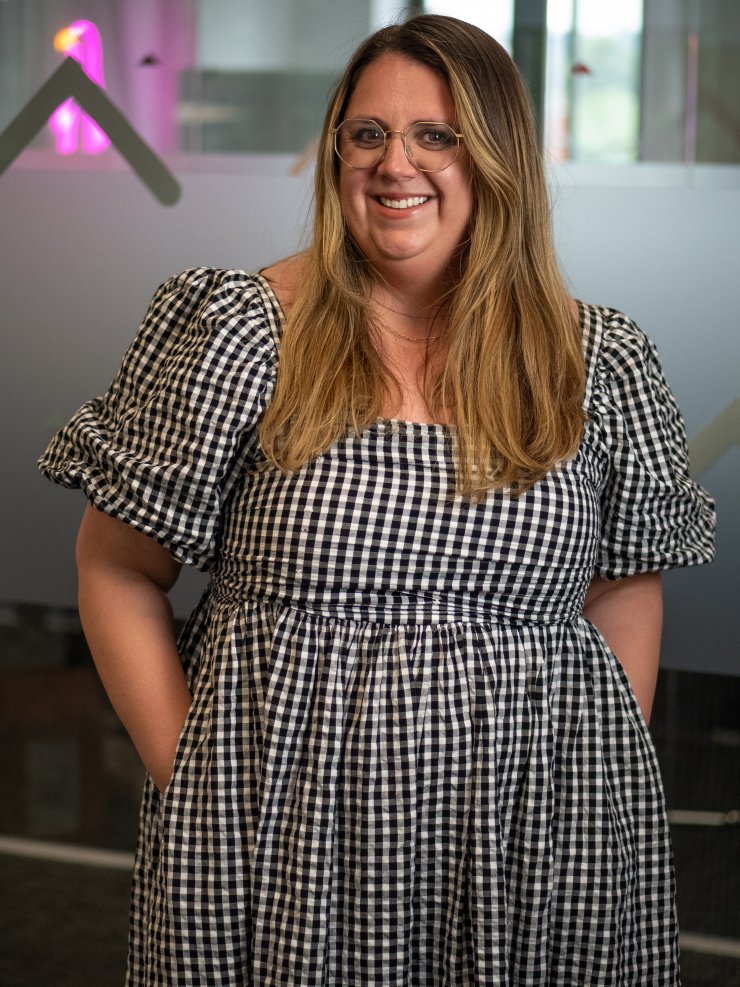
MEET THE AUTHOR.
HANNAH WELSH
Far from your workaday Account Manager, Hannah strives to be your organisation’s representative within Reflect Digital. She brings a strategic mindset to all of her work, and works consultatively with her clients to ensure that, together, they can find the way to take their digital marketing to the next level, and smash their targets. She also ensures all of the Reflect’s teams are aligned, prepared and organised to give her clients the best experience.
More about Hannah