
SEO Strategies for Hotels and Accommodation Providers: How to Win More Direct Bookings


In today’s hospitality market, hotels and accommodation providers face an uphill battle for visibility online. With Online Travel Agencies (OTAs) like Booking.com, Expedia, and Airbnb dominating search results, driving direct bookings can feel like an impossible task and often eats into profit margins due to high commission fees.
This is where SEO for hotels comes in. By optimising your website around traveller behaviour and applying psychology-driven nudges such as social proof and scarcity, you can increase visibility in search, attract the right guests, and encourage more direct bookings.
In this blog, we’ll explore the most effective SEO strategies for hotels and accommodation providers, highlight behavioural insights that influence bookings, and share actionable tips you can start applying today.
Understanding Traveller Behaviour Before Optimising
Before diving into SEO tactics, it’s essential to recognise how travellers make booking decisions. Very few guests book on impulse. Instead, they compare prices across multiple sites, read reviews, and seek reassurance before committing to a reservation.
It’s also important to understand where travellers are searching. Insights from SearchPulse highlight that audiences are no longer relying solely on Google; they're increasingly turning to social platforms and even AI tools when planning their trips. Factoring this into your SEO strategy ensures you meet customers wherever their journey begins.
This is where behavioural nudges can shape your SEO strategy:
-
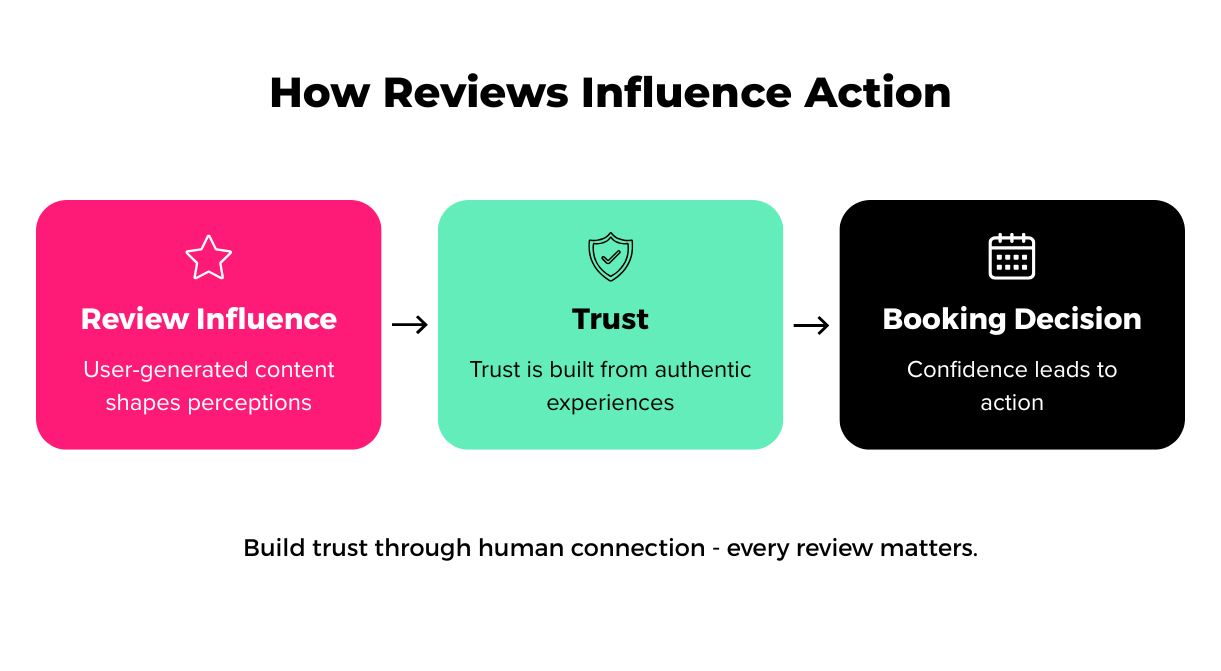
Social proof bias: 96% of travellers read reviews before booking accommodation (Tripadvisor data, 2025). By highlighting reviews in search results through structured data, you build credibility from the very first click. You can learn more about applying these techniques in our guide to behavioural science in digital marketing
-
Scarcity effect: Nudges like “Only 2 rooms left” or “Limited weekend availability” tap into urgency and accelerate decision-making.
-
Authority bias: Featuring awards, accreditations, or media mentions reassures travellers that your brand is trustworthy, influencing both click-through rates and conversions.
These behavioural insights help shape SEO strategies that not only improve visibility but also drive travellers to book directly with your hotel.
Key SEO Strategies for Hotels and Accommodation Providers
1. Keyword Research with Guest Intent in Mind
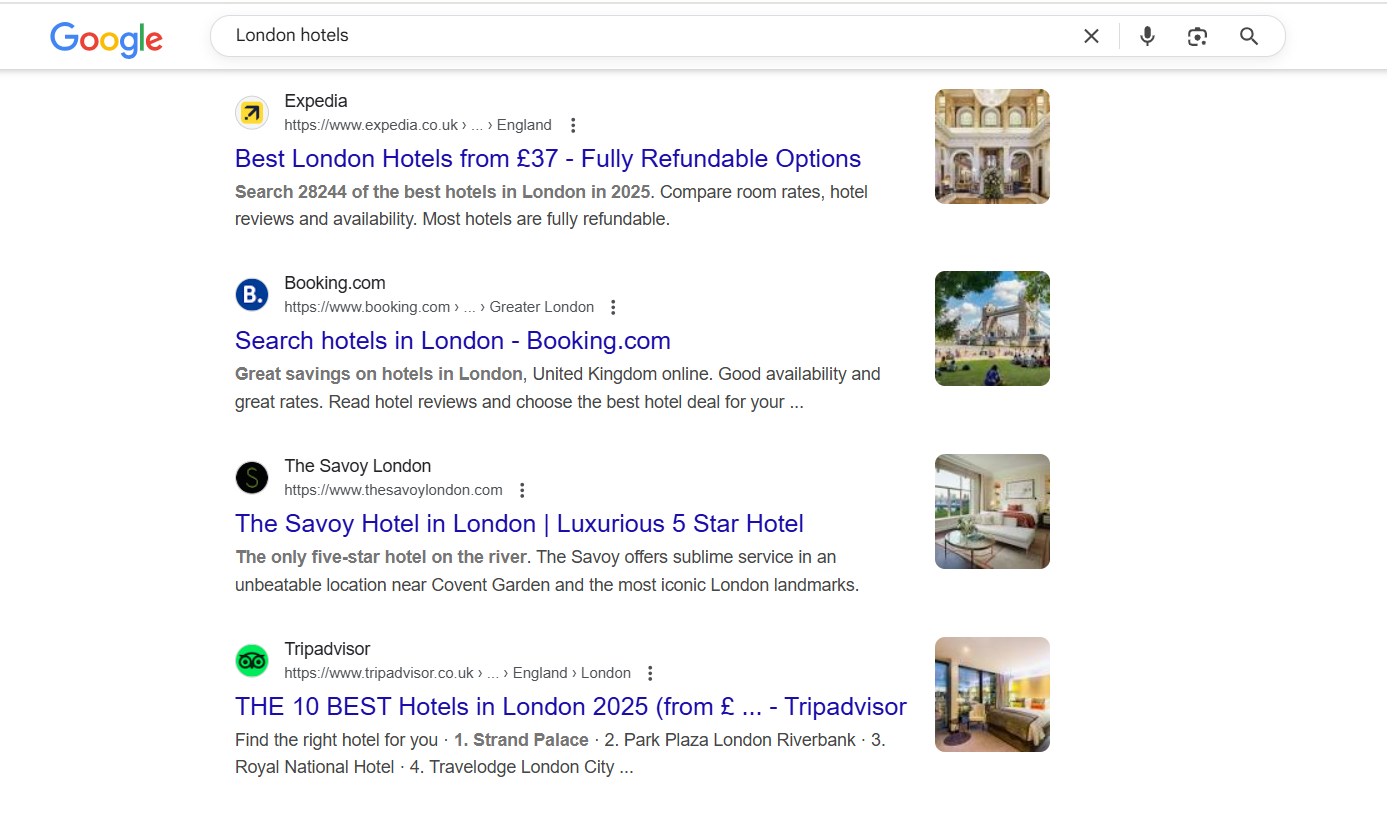
Ranking for broad terms like “London hotels” is nearly impossible for independent providers due to the dominance of OTAs. Instead, success comes from targeting long-tail, intent-driven keywords that match specific traveller needs. While these searches have lower search volumes, they are much higher in quality because they reflect real intent to book.
For example:
-
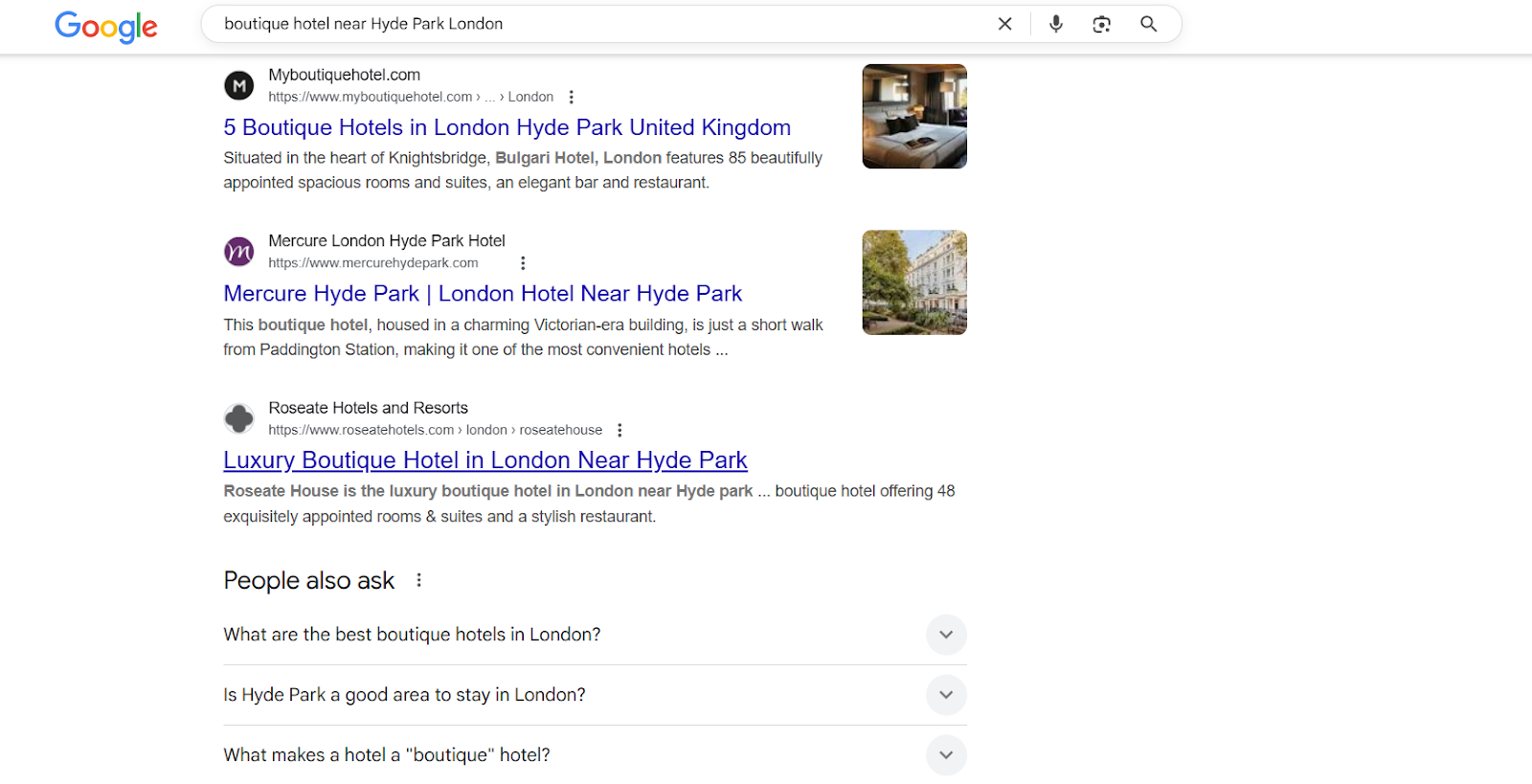
“Boutique hotel in London near Hyde Park”
-
“Family-friendly B&B in Brighton with parking”
-
“Pet-friendly accommodation in the Lake District”
These types of searches show exactly what travellers are looking for — proximity to landmarks, family-friendly features, or pet policies. According to Think with Google, 57% of leisure travellers feel more confident booking when content is personalised to their trip intent (Think with Google).
Pro tip: Use Google’s “People also ask” section, along with keyword tools like SEMrush and Ahrefs, to uncover FAQs that travellers are actively searching. For example: “Does this hotel have free parking?” or “Is breakfast included?”. Adding these FAQs to your site (and marking them up with schema) can increase visibility and reassure users with quick, trustworthy answers.
This also ties into the behavioural principle of chunking. Travellers are faced with many choices, and by breaking down complex decisions into smaller, digestible queries, you make your hotel easier to find and more relevant to the right audience.
2. Optimise Technical SEO for Speed and Mobile
-
Site speed matters: A slow-loading website means lost booking opportunities. Travellers expect quick results, and delays can cause them to abandon the process before completing a reservation.
-
Mobile-first experience: With the majority of travel searches happening on mobile, your site needs to provide a seamless browsing and booking experience on every device.
-
Hotel schema markup: Adding structured data for reviews, amenities, and room availability helps your site stand out in search results. Rich snippets, such as star ratings or “pet-friendly” tags, instantly build trust and encourage clicks.
From a behavioural perspective, poor technical performance creates friction costs. These are barriers that discourage travellers from completing a booking. The smoother the experience, the more likely visitors are to stay engaged and convert.
Want to learn more about improving your site performance? Check out our Technical SEO services for detailed insights.
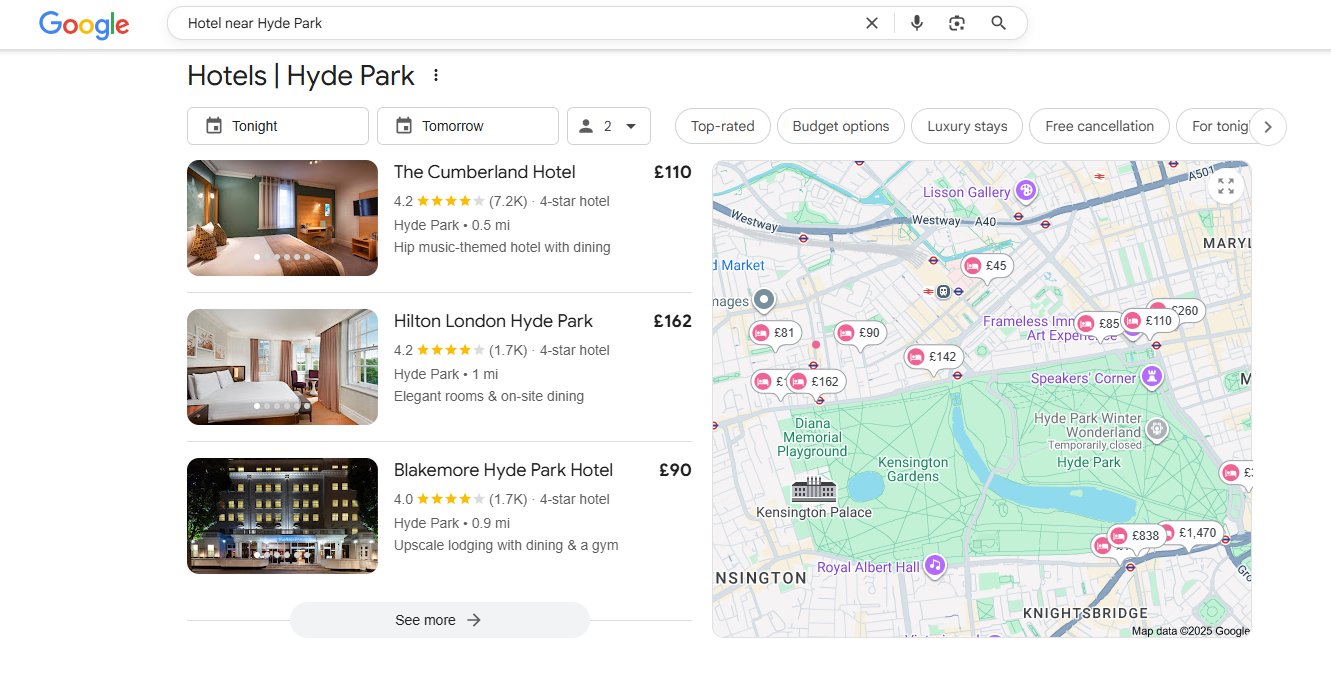
3. Content That Converts: Local SEO & Landing Pages
Travellers often start their booking journey with a destination-first mindset. Instead of searching directly for your hotel brand, they’re more likely to type queries such as:
-
“Hotels in Edinburgh near Arthur’s Seat”
-
“Best seafront hotels in Brighton”
To capture this intent, your content strategy needs to be built around local relevance and trust.
Here’s how to do it:
-
Create dedicated landing pages: Build pages for each city or area you serve, highlighting local attractions, amenities, and unique reasons to stay, alongside your accommodation details. This makes it easier for search engines and travellers to see why your property is the right choice.
-
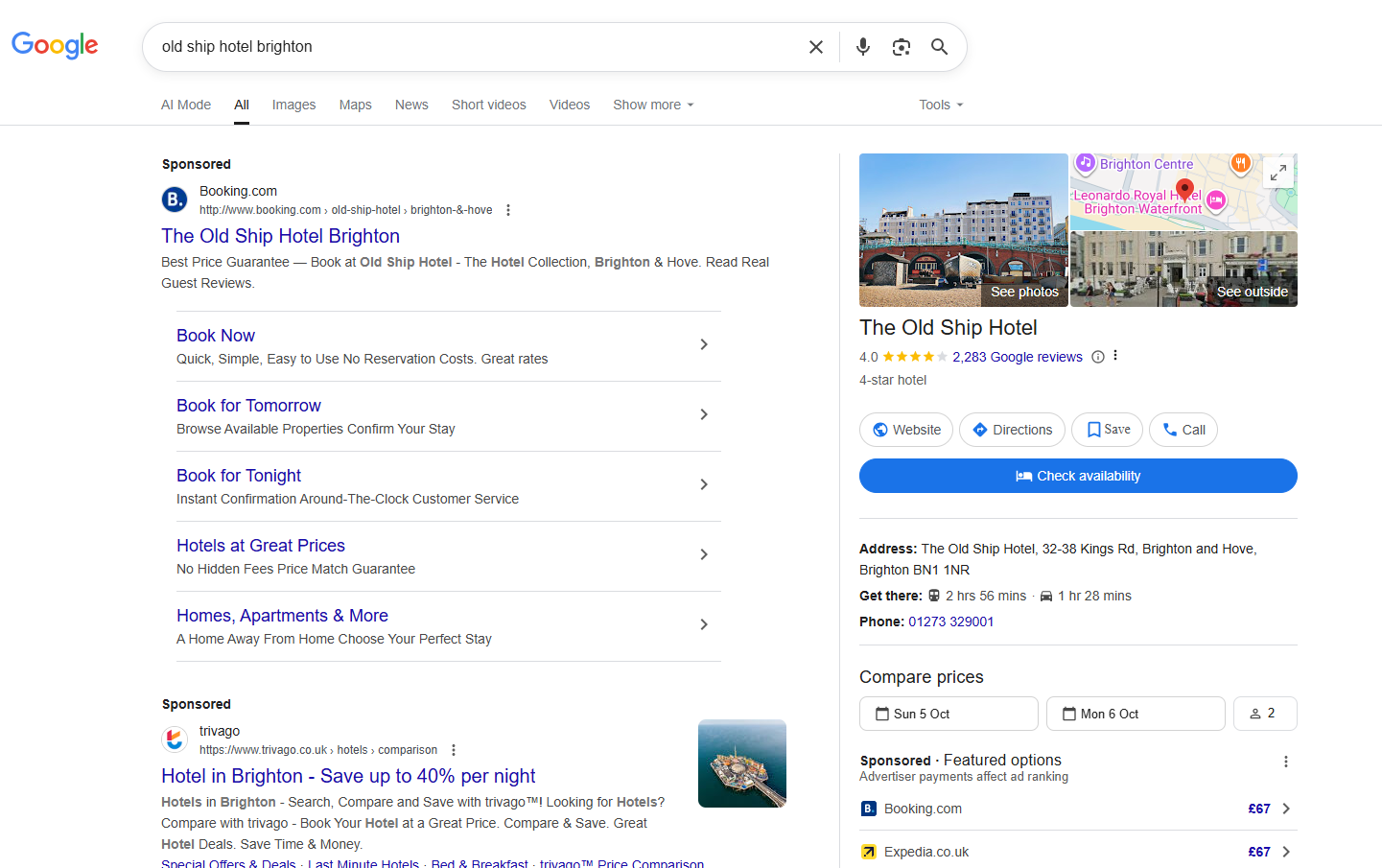
Optimise your Google Business Profile: Ensure your listing includes accurate details, updated photos, Q&As, and regular review responses. Profiles with photos see more engagement, including higher click-throughs to websites and more direction requests.
-
Showcase user-generated content (UGC): Guest photos, testimonials, and video reviews help build credibility. With most travellers trusting UGC more than traditional advertising, this content is a powerful way to influence decisions.
From a behavioural perspective, this leans on the principle of social proof. People trust real customer experiences far more than brand messaging, so highlighting UGC and authentic reviews nudges travellers closer to booking directly with you.
4. Build Trust & Authority with Links
Google rewards hotels that are recognised as credible and authoritative sources. For accommodation providers, building high-quality, relevant backlinks not only boosts search rankings but also enhances your brand’s reputation with both potential guests and search engines.
Here are some practical ways to strengthen authority through links:
-
Partner with local attractions, events, and tourism boards: By collaborating on cross-promotions or packages, your hotel becomes part of the wider destination ecosystem, naturally earning relevant backlinks.
-
Launch creative PR campaigns: Whether it’s a seasonal offer, a unique guest experience, or data-led travel insights, campaigns tied to trending stories often gain coverage in local news and lifestyle publications.
-
Publish evergreen local guides: Content such as 48 Hours in York (Visit York) or The ultimate guide to Brighton seafront hotels is highly shareable and more likely to attract organic links from travel blogs, lifestyle sites, and social platforms. Creating this type of content also strengthens your wider content strategy, ensuring your hotel remains visible to travellers at every stage of their booking journey.
By consistently putting your hotel at the centre of the destination story, you build credibility and trust that not only influences rankings but also positions your brand as a go-to choice for travellers.
5. Harness Reviews and Reputation Management
Reviews are one of the most powerful levers in hospitality marketing. They influence trust and also directly impact SEO performance, as Google includes review signals in its local ranking algorithm. A strong review profile helps your hotel appear more prominently in local search and increases click-through rates.
Here’s how to maximise the impact of reviews:
-
Encourage reviews: Ask guests to leave feedback after their stay. Even small increases in volume strengthen trust signals. Tools like Google Business Profile make it easier to collect and display these reviews.
-
Optimise responses: Use natural keywords when replying, e.g. “We’re delighted you enjoyed your stay at our spa hotel in Bath.” This approach not only personalises your response but also reinforces relevance for search engines.
-
Use structured data: Star ratings and snippets in search results can increase click-through rates by 20–35% (SchemaApp). Adding review markup as part of your wider technical SEO strategy helps your feedback stand out in SERPs.
-
Focus on quality: Hotels with higher review scores are 3.9× more likely to be booked, and 76% of guests are willing to pay more for better-rated stays (TrustYou Report).
Positive reviews also tie to confirmation bias; when travellers see feedback that aligns with their expectations, they feel reassured and are more likely to book.
Key Takeaways
-
Understand traveller psychology - Behavioural nudges like scarcity, social proof, and authority bias play a key role in influencing booking decisions.
-
Target long-tail keywords - Focus on intent-driven searches to attract high-quality traffic that’s more likely to convert.
-
Optimise technically - Mobile-first design, fast loading times, and structured data are essential for both SEO and user experience.
-
Leverage local SEO - Create city-specific landing pages and keep your Google Business Profile accurate, active, and engaging.
-
Build authority - Earn backlinks through partnerships, PR activity, and destination-focused content that positions your hotel as a trusted source.
-
Showcase reviews - Encourage guests to leave feedback, respond with SEO-friendly keywords, and highlight ratings in search results to build trust and visibility.
Ready to boost your hotel’s visibility and increase direct bookings? At Reflect Digital, we combine SEO expertise with behavioural science to deliver strategies that attract the right guests and drive measurable results. Get in touch with our team today.
Contact Us

MEET THE AUTHOR.
NARAYAN GOSWAMI
Narayan supports the SEO team at Reflect Digital by executing key strategies that drive performance for clients. He is passionate about delivering high-quality content, on-page optimisations, and technical SEO solutions that enhance website performance and improve search visibility. Narayan thrives on analysing data through tools like SEMrush, Google Analytics, and Google Search Console to uncover opportunities for growth.
He aims to continuously develop his skills while contributing to Reflect Digital's mission of achieving outstanding results for clients. Narayan enjoys being part of a collaborative environment where innovation and excellence are celebrated, and personal and professional growth are encouraged.
More about Narayan