

3 Shifts Redefining Home & Lifestyle Marketing


There was once a time when searching for home inspiration meant typing a query into Google and clicking on the first few blue links. But as we move into 2026, this has all changed!
For anyone in the home and lifestyle space, from interior designers to DIY retailers, the way people find you is a mix of social discovery, AI assistants, and traditional search. Our latest SearchPulse report shows that search is no longer a single action, and it’s now driven by different motivations.
The Rise of the Taste-Tuners
We’ve seen a massive shift toward taste-tuning, which is where users search to discover content that fits their personal aesthetic or aspirational identity. This is particularly true for the under-34 demographic. They want to see a kitchen renovation in action on TikTok or a curated mood board on Instagram.
If your brand is only visible on a traditional search results page, you are effectively invisible to this next generation of spenders.
Trust is the secret tool of DIY
While many users are flocking to AI tools like ChatGPT for quick results and ease of use, there is a growing trust paradox. Around 35% of people admit they don't fully trust the information AI gives them. When it comes to home improvements, where mistakes can be super costly, trust is incredibly important. Users are looking for information and real stories from real people to validate their choices.
To build that authentic trust, your brand should focus on showcasing genuine human voices and real-life projects through social proof. Partnering with trusted, real-world experts who can provide third-party validation. Layering authoritative human commentary over any AI-generated or data-heavy content.
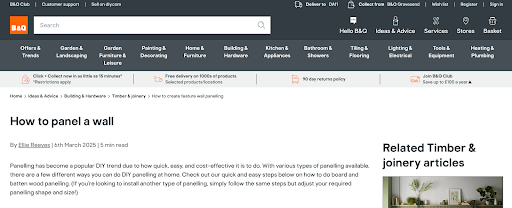
B&Q is a great example of a brand that leans into expert-led social proof. They provide ‘how-to’ guides and videos featuring real trade experts. By layering expert commentary over their product pages, they bridge that trust gap users feel when using AI for DIY advice. They’ve even shifted their search strategy to be more "informational," making sure they are visible when people ask "how do I install...?" rather than just "buy a...".
Piglet in bed is a brilliant example, as they made the bold step and moved away from perfectly staged studio shots and started collaborating with creators to show their linens in real, imperfect homes. Proving that in 2026, a lived-in room is far more persuasive than a photoshopped one.

Is AI Your New Interior Designer?
We’ve found that 27% of people are now using ChatGPT regularly, often treating it like a personal assistant. When we collaborate with AI on a project, we experience what’s known as the Ikea Effect, which is where we value the final plan more because we helped create it, so there is an element of psychological ownership.
In the home sector, this looks like users asking AI to "help me plan a gallery wall" or "how to DIY a panel wall" (speaking from experience!) However, while younger audiences (under 45) are open to ads within these conversations, they will only accept them if they add immediate and hyper-personalised value. An irrelevant ad in an AI chat can feel like a breach of trust.
Key Takeaways
- The way we search for home inspiration has moved beyond a single search box, becoming a journey across social media and AI tools.
- Younger audiences are searching for an aesthetic and an identity, meaning brands need to be visible on visual platforms like TikTok and Instagram to stay relevant.
- Despite the rise of AI, human trust remains the most important factor in DIY, so sharing real stories and expert advice is essential.
- AI is becoming a personal assistant for home planning, but any brand presence within these tools must be highly personalised to avoid feeling intrusive.
To see the full breakdown of how consumer habits are shifting in your industry, you can download the SearchPulse report here.
If you'd like to know more about how search is changing for your brand, get in touch with our team today.
Contact Us
MEET THE AUTHOR.
HANNAH WELSH
Far from your workaday Account Manager, Hannah strives to be your organisation’s representative within Reflect Digital. She brings a strategic mindset to all of her work, and works consultatively with her clients to ensure that, together, they can find the way to take their digital marketing to the next level, and smash their targets. She also ensures all of the Reflect’s teams are aligned, prepared and organised to give her clients the best experience.
More about Hannah