
Why Trend-Based PR Needs a New Playbook


By the time a trend reaches a headline, people have already moved on.
But this wasn’t always the case.
For years, the PR playbook taught us to monitor the headlines for the biggest stories and global trends. It was a race against time (and other brands) to jump on viral moments and cultural conversations, before they disappeared from the news cycle (or someone else simply beat you to it).
Now, the rules have changed. Culture no longer moves newsroom-first, it moves platform-first. The media relies on brands to shape its news agenda, while consumers expect them to drive or weigh in on those all-important cultural conversations. But how brands respond to trends in digital marketing and PR activity is no longer measured by how viral they go, it’s how successfully (and sensitively) they can turn a cultural moment spotted through online communities, social media, and other content ecosystems into a unique PR campaign that has media and audience appeal.
Today, the most exciting trends and interesting cultural conversations are born from multiple platforms - playing out across TikTok vlogs and Reddit discourse, YouTube videos, Pinterest, LinkedIn, and AI tools, long before they reach mainstream media. Whether that’s summer travel inspired by the latest ‘dusking’ social media trend, understanding how humans really feel about bringing a new pet into the household through the biggest Reddit queries, or DIY ‘messy makeover’ YouTube videos reshaping home and garden inspiration, PRs must have their ears firmly on the ground so not to miss out on a key moment to secure coverage and build awareness.
PR’s next challenge: showing up where people search
However, trend-spotting for mainstream media coverage is only part of the puzzle for PRs, and while this blog will equip you with some handy tips on how to find the latest and greatest trends, it will also give you the knowledge on how brands can show up in the places people search with the content people care about, as brand discoverability becomes a core pillar of digital PR strategies.
Reflect Digital’s latest SearchPulse reports reveal just how fragmented search behaviour has become, as consumers switch between search platforms for comparisons, research, and inspiration. The key question now is how trend-led PR content can go beyond the media and be translated for visibility across multiple channels, including AI search?
Before we dive in, I’ll give you a clue on one content format set to dominate PR in the months ahead: it’s visual, highly searchable and no longer confined to social media feeds. Read on to find out more…
Three key ways to trend-spot for the strongest PR campaigns
1. Tap into social listening
Our approach to Behavioural Science in digital marketing and PR enables us to better understand the emotions, motivations and cultural tensions driving online conversations. By undertaking social listening across platforms like TikTok, X, Reddit and YouTube, we have unfiltered access to how people genuinely think and feel - the frustrations they experience and the behavioural choices they make. For PRs, these are extremely valuable insights. They allow us to identify potential trends long before they reach the mainstream and build campaigns rooted in human sentiment and intent - ones that feel culturally relevant, not opportunistic.
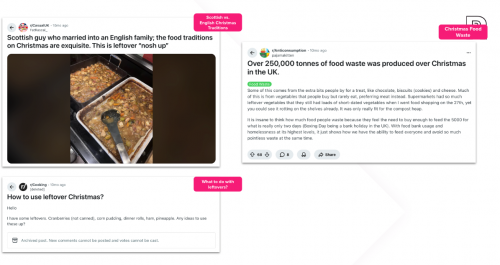
Over the Christmas period, we undertook social listening for our client Brakes Foodservice. We noticed a lot of online chatter around Christmas leftovers and food wastage over the festive season, which we turned into a ‘food inspiration’ campaign. Using commentary from an expert chef, we provided top tips on preventing food waste, while sharing leftover recipes using the most common leftover foods. This was picked up by Huffington Post - a fantastic, top-tier publication, which then requested additional food commentary from Brakes for other articles.
2. Online search behaviour and Google Trends
Online search data has become a really powerful tool for identifying emerging trends. Platforms like Google Ads Keyword Planner and Google Trends allow PR teams to track rising search behaviour, uncover seasonal spikes in behaviour and understand exactly what audiences are searching for in real time.
Most recently, we worked on a campaign for our client Hopes Grove Nurseries around the start of pollinator season. Through a combination of online search data and Google Trends insights, we found searches for ‘bees in spring’ were up 200% in the last three months, while ‘best plants for bees uk’ had risen 100% over the same period and year-on-year. This was the human behaviour part of the campaign planning. We then saw search queries for ‘bee season in the uk’ had peaked in March last year. This ensured our campaign was timely and relevant for this season. Combining these insights, we created a campaign on the ‘Five plant, 10-minute garden jobs to feed bees before April.’ We included expert commentary on key gardening jobs and best plants for bees, while addressing behavioural nudges, such as procrastination bias - many homeowners act too late and miss peak planting season, and visibility bias - consumers prioritse visually impressive gardens, rather than wildlife-friendly.
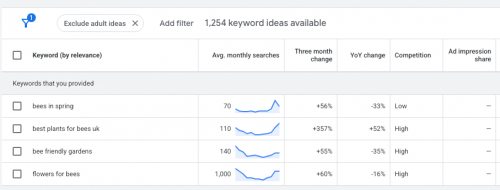
The campaign was hugely successful, with over 14 pieces of coverage across The Express, The Mirror (regional Reach titles) and Country Living.
3. TikTok Creator Insights
Influencers and content creators drive some of today’s biggest cultural shifts. TikTok offers real-time insight into the latest viral trends and how online communities are emerging - whether that's food, gardening, travel or even the latest dance challenges. By analysing creator content, engagement patterns and what’s unfolding in the comment sections (and yes, dogs farting after eating a meal was a campaign we developed for Everypaw with an expert vet), we can understand what scrollers really care about (or are ranting about) and want to see more of right now.
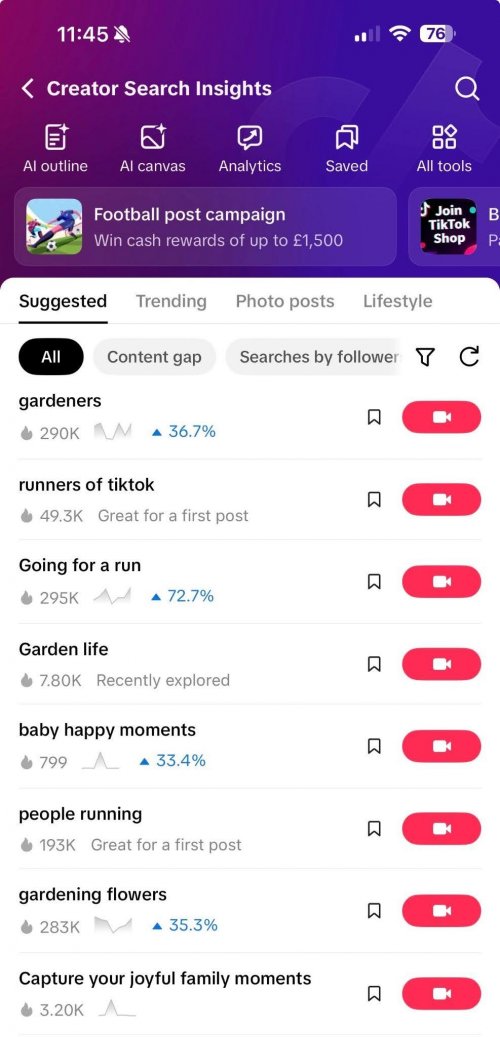
TikTok’s Creator Search Insights is an in-app tool with built-in keyword research that reveals exactly what users are searching for on TikTok. It allows you to search for popular topics to see where specific queries have increased over a certain time period. If we see any upward trends in recent weeks or months, we can build this into our campaign planning - both as a hook and a proof-point to an already identified idea.
Building visibility across multiple search platforms
Tend-led PR content no longer stops at the headlines. It needs to be discoverable across the fragmented ways people search, supporting:
- SEO visibility
- E-E-A-T signals
- Brand authority
- Keyword discovery
- AI search inclusion
Our SearchPulse data reveals AI has moved from a novelty to a necessity as more people now use AI search tools at least sometimes (52%) than rarely or not at all. PR content can no longer solely be created for journalists or traditional search engines, it needs to be rooted in expertise and authority, while answering real human queries, to increase its chances of showing up across AI tools.
A single campaign also must now evolve far beyond a press release or feature. For example, expert commentary can inform short-form TikTok or Instagram explainers, be used as quotes on blogs or help inform other marketing and Paid Media content. This is why, at Reflect Digital we take a collaborative, behavioural-led approach to client activity. Our SEO, Paid, Behavioural and PR teams are not siloed and we regularly collaborate on tasks to improve efficiencies and results. For example, we recently created a Notebook LM for a client with all existing trend-led PR content. The SEO team then has access to this for blog ideas and content optimisation.
The answer: PRs most valuable future asset
In my intro, I mentioned a content format set to dominate PR in the months ahead. If you hadn’t already guessed, this is video. Our Q1 SearchPulse Report on Home & Lifestyle reveals a rise in ‘show me’ behaviour. Consumers don’t want brands to just tell them something, they want to be shown - and the more raw and authentic the better.
According to the SearchPulse data, under 34s are more reliant on short-form video research across Instagram (38%), TikTok (37%), and YouTube (33%), while 45% say easy-to-follow instructions influence purchases and 32% want step-by-step guides, as ‘how to’ videos build trust faster.
This behavioural shift matters because AI search is increasingly multimodal, meaning it can interpret and surface information from video, imagery, and audio alongside written text.
For journalists, video is increasingly becoming an important part of their digital sites. Therefore, PRs should consider how they incorporate short-form videos into their campaigns. Whether that’s a piece to camera on expert-led commentary or behind-the-scenes insights and tutorials. For our client, Complete Pilates, we often include ‘how-to’ YouTube videos on key Pilates exercises in our outreach to lifestyle and fitness press.
You can find out more about our video production services here.
Key Takeaways
- Culture no longer moves newsroom-first, it moves platform-first: The strongest PR campaigns come from trend spotting across multiple platforms including social media, online forums (like Reddit) and Google search data - identifying hooks long before they reach mainstream media.
- Discoverability matters just as much as viability: Trend-led PR content must be designed to show up across search engines, AI tools and social platforms, not just traditional media coverage. While it should also be adapted and repurposed for other marketing and SEO purposes.
- AI search is reshaping digital PR: Expert-led, trustworthy and human-first content is more likely to appear in AI-generated search results - strengthening brand authority and reaching wider audiences.
- Video is quickly becoming PR’s most valuable asset: Consumers increasingly crave visual ‘show me’ content, while video assets have a growing appeal among journalists.
Want to be part of those all-important cultural conversations to build brand recognition? Speak to our expert team to discover how we create trend-led, discoverable content that improves visibility across media, social and AI.

MEET THE AUTHOR.
JESSICA DICKENSON
As a Digital PR Manager, Jess leads Reflect Digital’s public relations efforts with a strong focus on storytelling, strategic thinking, and standout communication skills. She’s responsible for securing consistent, high-quality media coverage and building lasting relationships with journalists and key stakeholders. Jess also provides ongoing counsel from a PR perspective, ensuring clients receive seamless, results-driven support throughout.
More about Jessica